
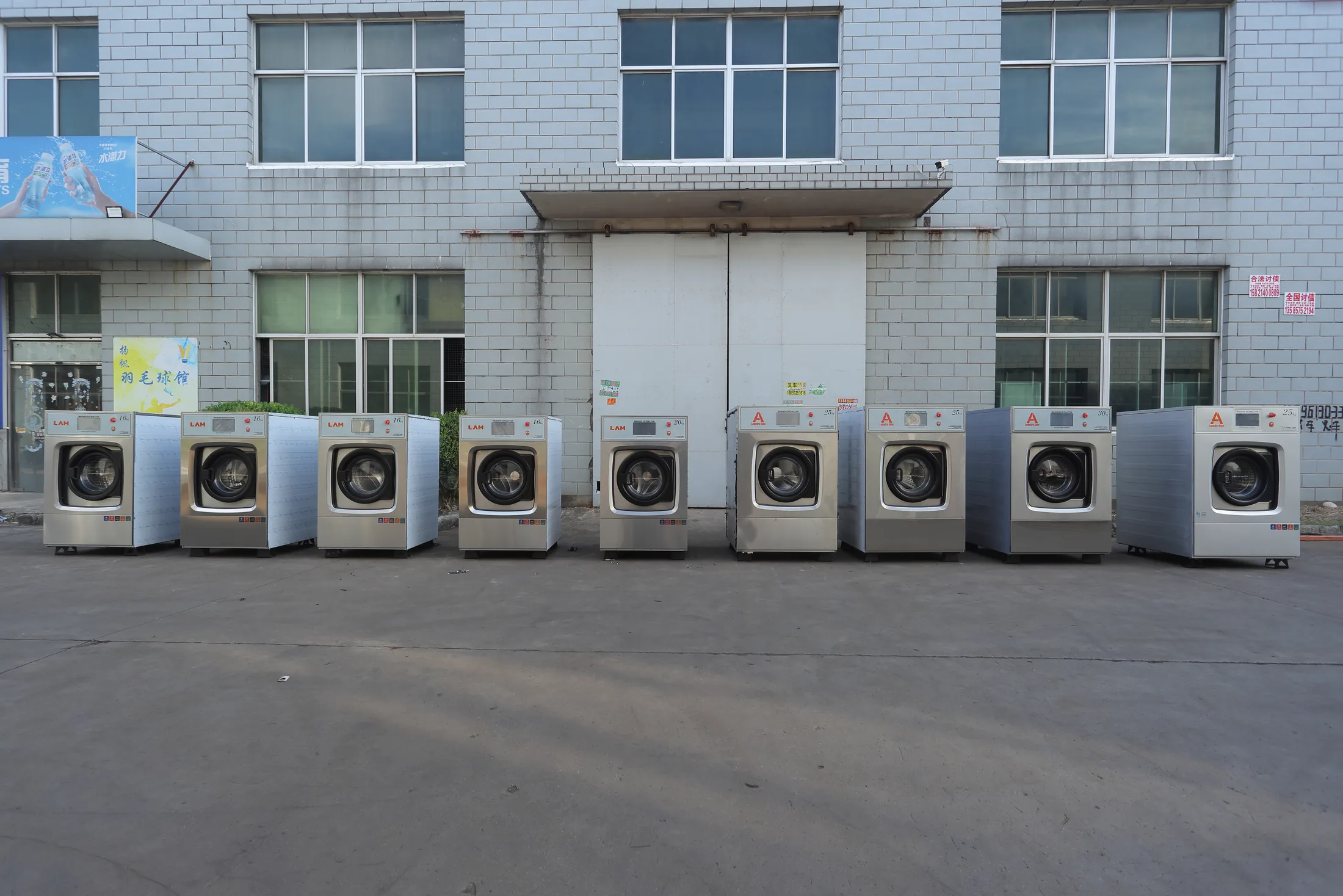
Washer-to-dryer balance
Match dry-load size and expected residual moisture so wet goods do not wait between processes.
Drying equipment
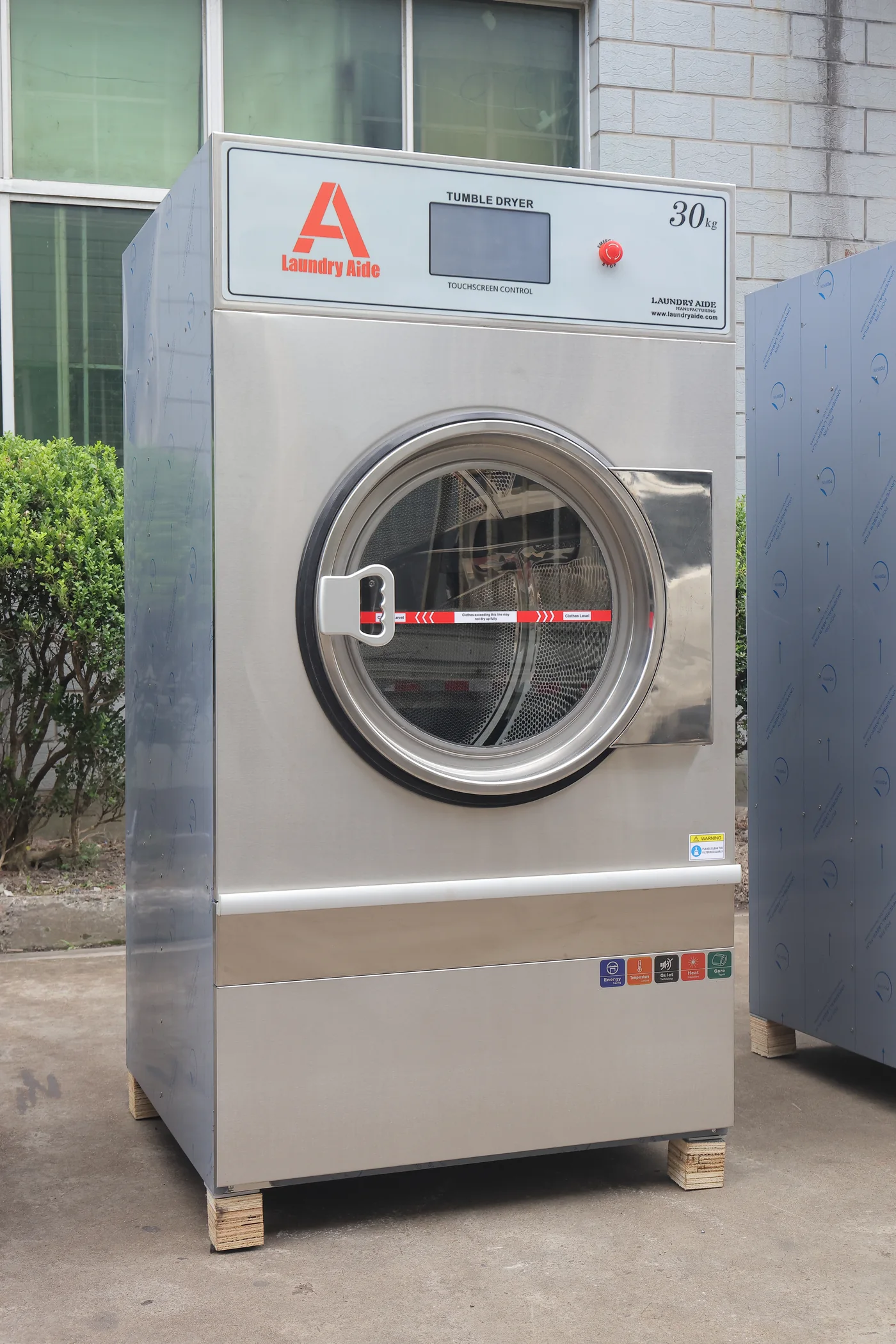
Professional dryers selected around load size, moisture removal, heating source, airflow and room ventilation.
Answer first
A commercial tumble dryer should be sized to the washer load and the actual moisture remaining after extraction. Heating source, exhaust route, ambient make-up air and cycle targets all influence the final configuration.
Use tumble dryers for towels, garments and other loads that do not move through a flatwork ironing line. For a balanced room, compare washer batch size, extraction level and dryer cycle time together.
Selection framework
Capacity is only one part of a dependable laundry system. These inputs affect equipment selection, utilities and room layout.
Match dry-load size and expected residual moisture so wet goods do not wait between processes.
State whether steam, gas or electric heating is preferred and what is available on site.
Confirm exhaust routing, make-up air and room ventilation before fixing the layout.
Configuration checklist
We use these fields to match the machine and project scope. Exact values are confirmed on the current technical sheet for the selected model.
| Nominal capacity | Choose against washer batch size; the photographed unit is marked 30 kg. |
|---|---|
| Heating method | Confirm current steam, gas or electric options for the selected model and market. |
| Airflow | Exhaust connection and make-up air requirements are model-specific. |
| Drum & cabinet | Material options and contact surfaces should be confirmed on the data sheet. |
| Controls | Confirm temperature programs, cycle controls, language and safety settings. |
| Documents | Request utility requirements, exhaust data, dimensions and packing information. |
Model availability and specifications can change. Request a project-specific data sheet before purchase or installation planning.